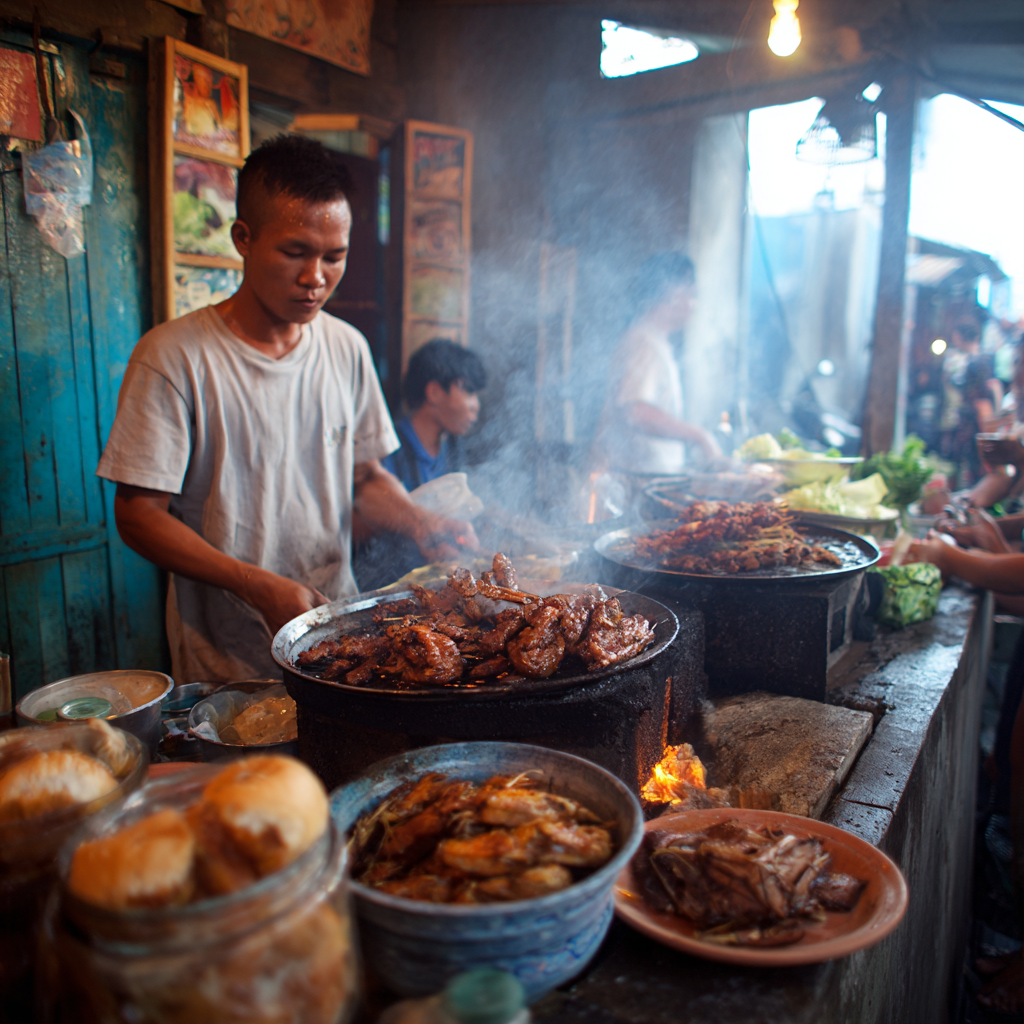
1. Why Street Food is the Heart of Southeast Asia
Street food isn’t just cheap and convenient, it’s culture on a plate. Vendors cook dishes passed down for generations, flavors balanced perfectly, and everything made fresh to order. Some meals cost just a few dollars, yet they rival high-end restaurants.
Tip: Follow the locals. If a stall is crowded, chances are the food is amazing and fresh.
2. Must-Try Dishes by Country
Thailand – Bangkok & Chiang Mai
Pad Thai: Classic stir-fried noodles with shrimp, tofu, peanuts, lime. Street versions are often better than touristy restaurants.
Mango Sticky Rice: Sweet, creamy, tropical. Look for vendors who make it fresh.
Boat Noodles: Tiny bowls of flavorful soup sold at multiple stalls for a few baht each.
Vietnam – Hanoi & Ho Chi Minh City
Pho: A fragrant noodle soup with slow-cooked broth, herbs, and tender beef. Early morning is prime time.
Banh Mi: French-style baguette sandwich with meat, pickled veggies, chili, and fresh herbs. Cheap, filling, delicious.
Goi Cuon: Fresh spring rolls with shrimp, herbs, and peanut sauce – light and perfect for snacking.
Malaysia – Penang & Kuala Lumpur
Char Kway Teow: Stir-fried flat noodles with shrimp, eggs, Chinese sausage, and bean sprouts. Smoky, rich, unforgettable.
Roti Canai: Fluffy flatbread served with curry – simple but addictive.
Asam Laksa: Tangy, spicy fish-based noodle soup, not for the faint-hearted, but locals love it.
Indonesia – Bali & Jakarta
Nasi Goreng: Fried rice with egg, chicken, and sweet soy sauce. Every vendor has their signature twist.
Satay: Grilled skewers with peanut sauce, best from roadside grills.
Bakso: Meatball soup, hearty, comforting, perfect for rainy afternoons.
Cambodia – Phnom Penh & Siem Reap
Lok Lak: Stir-fried beef with tangy sauce, served with rice and veggies.
Nom Banh Chok: Khmer noodles with fish gravy and fresh herbs – breakfast staple.
Fried Insects: For the brave – crunchy, salty, surprisingly addictive.
3. How to Eat Street Food Safely
Street food can be safe if you follow a few simple rules:
Watch the locals: Crowded stalls usually indicate turnover and fresh ingredients.
Check cleanliness: Observe prep surfaces, utensils, and how food is stored.
Go hot: Choose dishes cooked in front of you, piping hot, rather than pre-made and sitting out.
Drink smart: Stick to bottled water or boiled drinks. Ice is sometimes risky.
Tip: Trust your gut. If a stall looks sketchy or smells off, move on.
4. Secret Tips from Locals
Eat early: Breakfast and lunch crowds mean fresher food. Evening markets are fun, but some dishes sit around too long.
Try small portions: Sample multiple dishes without overeating. Variety is the street food joy.
Negotiate carefully: Some vendors allow small discounts, but tipping is not required. Polite is better than pushy.
Bring cash: Most stalls don’t accept cards, small denominations are best.
5. Hidden Street Food Gems
Bangkok Chinatown: Winding alleys with noodle soups, skewers, and desserts. Eat like a local, follow the lines.
Hanoi’s Old Quarter: Tiny alleys hide the best pho, bun cha, and banh mi. Don’t rush – explore.
Penang Hawker Centers: UNESCO-listed food paradise, but find the stalls locals frequent, not just the tourist spots.
Ubud Market, Bali: Morning market has fresh fruit, local pastries, and fried treats.
Tip: Sometimes the most amazing meals are in the least obvious places. Don’t just stay on the main streets.
6. Street Food Etiquette
Don’t point with chopsticks or fingers.
Take only what you can eat. Wasting food is frowned upon.
Queue patiently. Locals can be serious about lines.
Engage with vendors with a smile – basic words like “hello” and “thank you” go a long way.
7. Gear & Prep for Street Food Adventures
Wet wipes or hand sanitizer: Your hands will touch money, food, menus.
Reusable cutlery & straw: Optional, but eco-friendly.
Light backpack or day bag: Carry essentials, snacks, bottled water.
Camera or phone: Capture your culinary finds – Instagram optional but fun.
8. Beyond the Food – Culture & Experience
Street food isn’t just about eating, it’s about immersion. You meet locals, watch skills passed through generations, smell the scents, hear the sizzling, feel the heat of grills, and taste history. Each dish tells a story – the farmer, the vendor, the recipe.
Travel isn’t complete without tasting the culture through food. Southeast Asia’s streets are classrooms, restaurants, and theaters all in one.
Conclusion
Southeast Asia is a street food wonderland, and with some preparation, curiosity, and courage, you can eat safely, cheaply, and deliciously. Equip yourself with these tips, follow the locals, sample boldly, and embrace the flavors you’ll never forget. From spicy soups to crispy treats, your taste buds are in for an adventure as wild as the streets themselves.
Explore alleys, watch the woks, and don’t be afraid to try that dish that looks unusual. The real magic of Southeast Asia isn’t just the sights, it’s the smells, tastes, and flavors that make you fall in love with the region, one bite at a time.